Street photography
in Melbourne.
Finding photographs in the everyday life of the city.
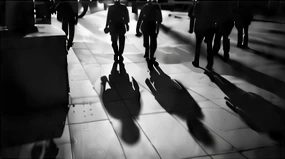
A familiar street can look different every time you walk it. The light shifts, people pass through, and an ordinary corner becomes something worth stopping for.
For me, street photography begins with paying attention. You don't always need a particular destination or a plan. Sometimes it is enough to walk, look and allow the city to offer something unexpected.
Start with what you notice.
Look for the things that hold your attention: a gesture, a patch of light, a relationship between people and their surroundings. Spend time with those small observations before deciding whether to make a photograph.
Returning to the same place can be useful. Familiarity gives you time to look beyond the obvious and recognise moments you might have missed on a first visit.
Give yourself time.
There is no need to cover the whole city in an afternoon. Choose a small area and spend some time there. Watch how the light falls and how people move through the space.
Try a simple approach on your next walk:
- Choose one street or a small group of blocks.
- Pause when something catches your attention.
- Look through your photographs afterwards and notice what keeps returning.
From individual images to a series.
Over time, connections may begin to appear between your photographs. A repeated subject, a feeling or a way of seeing can become the starting point for a more considered body of work.
Editing is part of that process. Put a few images together, change their order, and see how they speak to one another. Leave room for the project to develop as you keep photographing.
Keep walking. Keep looking. Return to the places that make you curious.
Back to articles