Street Photography in Melbourne: Know Your Rights
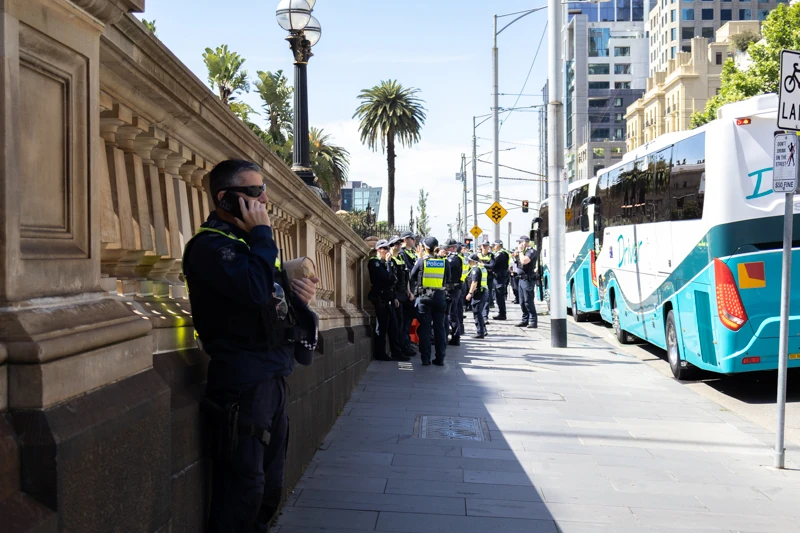
Street photography in Melbourne sits at an interesting intersection of art, law, and human emotion. The act itself is legal, but the experience can feel uncertain — especially when questioned by police or confronted by members of the public.
This guide is not about confrontation or “knowing your rights” in a combative way. It’s about understanding where you stand, so you can photograph with quiet confidence and move through the city without unnecessary stress.
In a city like Melbourne, where public space, protest, art, and observation overlap daily, street photography is a normal and lawful activity.
Disclaimer: This article is general information based on Victorian law, not legal advice.
Street Photography Is Legal in Public Places
In Victoria, you are allowed to photograph in public spaces. That includes streets, footpaths, parks, squares, and other places where the public is generally allowed to be.
You do not need permission to photograph people in public. There is no law requiring consent for street photography itself.
This applies whether you are photographing:
- People
- Buildings
- Scenes
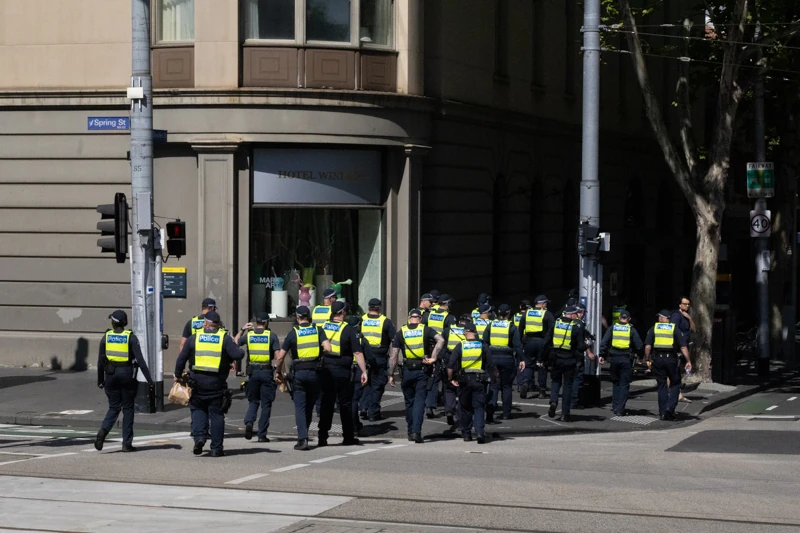
- Police
- Reflections, silhouettes, gestures, or moments
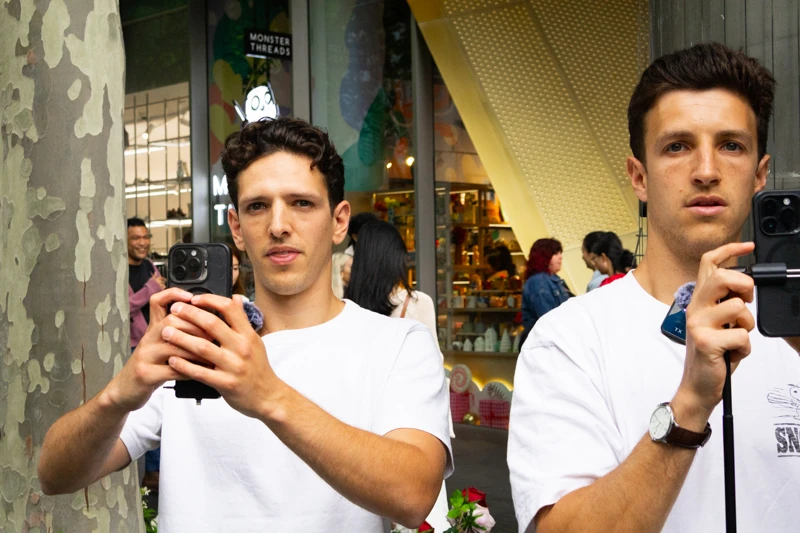
If you are standing somewhere lawfully, the act of taking a photograph is lawful.
When Police Approach You While Photographing
If police stop you while you’re doing street photography, it’s important to separate polite cooperation from legal obligation.
What police can ask
Police may ask questions, including what you are doing. You are not required to explain your artistic intent or justify your presence.
You can calmly say:
“I’m photographing in a public place.”
Or you can choose not to answer questions beyond what is legally required.
Identification
Police can only require your name and address in specific situations (for example, if they reasonably believe you are involved in an offence). Outside of those situations, you are not required to provide ID.
Viewing your photos
Police cannot demand to see images on your camera or phone simply because you are photographing in public.
They also cannot:
- Force you to unlock your device
- Scroll through your images
- Make you delete photos
Unless there is a warrant, an arrest, or a serious lawful reason, your device remains private.
A clear response is:
“I don’t consent to showing images or accessing my device.”
If Police Ask You to Delete Photos
Police do not have the power to require you to delete images taken lawfully. In fact, deletion can create legal complications, as it may be considered destruction of evidence.
If asked, a calm response is:
“I’m not willing to delete anything.”
Do not argue. Do not escalate. State your position and remain calm.
When a Member of the Public Confronts You
This is far more common than police interaction.
A private citizen has no legal authority to:
- Demand to see your photos
- Demand deletion
- Confiscate your camera
- Detain you
Even if they believe you photographed them, they cannot compel you to prove otherwise.
You are within your rights to refuse, but how you respond matters.
De-escalation over explanation
Long explanations often make situations worse. Short, neutral statements are safer.
Helpful phrases include:
- “I’m photographing the street, not individuals.”
- “I’m allowed to photograph in public.”
- “I’m moving on.”
You are not required to show images to “prove” anything.
If the situation becomes tense, the best decision is often to disengage and leave — not because you’re wrong, but because your safety matters more than any photograph.
When Street Photography Crosses the Line
While street photography is legal, there are clear boundaries.
It becomes illegal if it involves:
- Up-skirting or invasive photography
- Photographing people in places with a reasonable expectation of privacy (toilets, change rooms, inside homes)
- Harassment or repeated targeting after someone objects
- Stalking behaviour
It also changes legally if images are used for commercial advertising. Selling prints, books, or exhibiting work is not advertising. Using images to promote a product or business is.
Police, PSOs, and Security: Know the Difference
Not everyone in uniform has the same powers.
- Victoria Police have the most authority, but still cannot demand access to your images without lawful grounds.
- PSOs (often seen at stations) have more limited powers and are focused on transport safety.
- Private security are not police. They can ask you to leave private property, but they cannot demand images or deletion.
If you are asked to leave private property, leaving calmly is the simplest option.
Publishing Your Work Online or in Exhibitions
You are allowed to publish street photographs taken in public for:
- Art
- Editorial
- Documentary
- Personal projects
- Websites
- Photobooks
- Exhibitions
You generally only need a model release if the image is used for advertising or commercial promotion.
Practical Street Wisdom (Beyond the Law)
Knowing the law helps, but behaviour matters just as much.
Experienced street photographers often:
- Avoid hovering
- Keep moving
- Don’t explain unless necessary
- Don’t show images on request
- Leave after a confrontation
Confidence doesn’t come from arguing — it comes from calm certainty and knowing when to disengage.
The Key Thing to Remember
You are allowed to photograph in public.
You are not obligated to justify yourself.
And you are not required to hand over your images casually.
Street photography works best when it’s quiet, observant, and grounded. Understanding your rights isn’t about confrontation — it’s about removing fear so you can focus on seeing.